
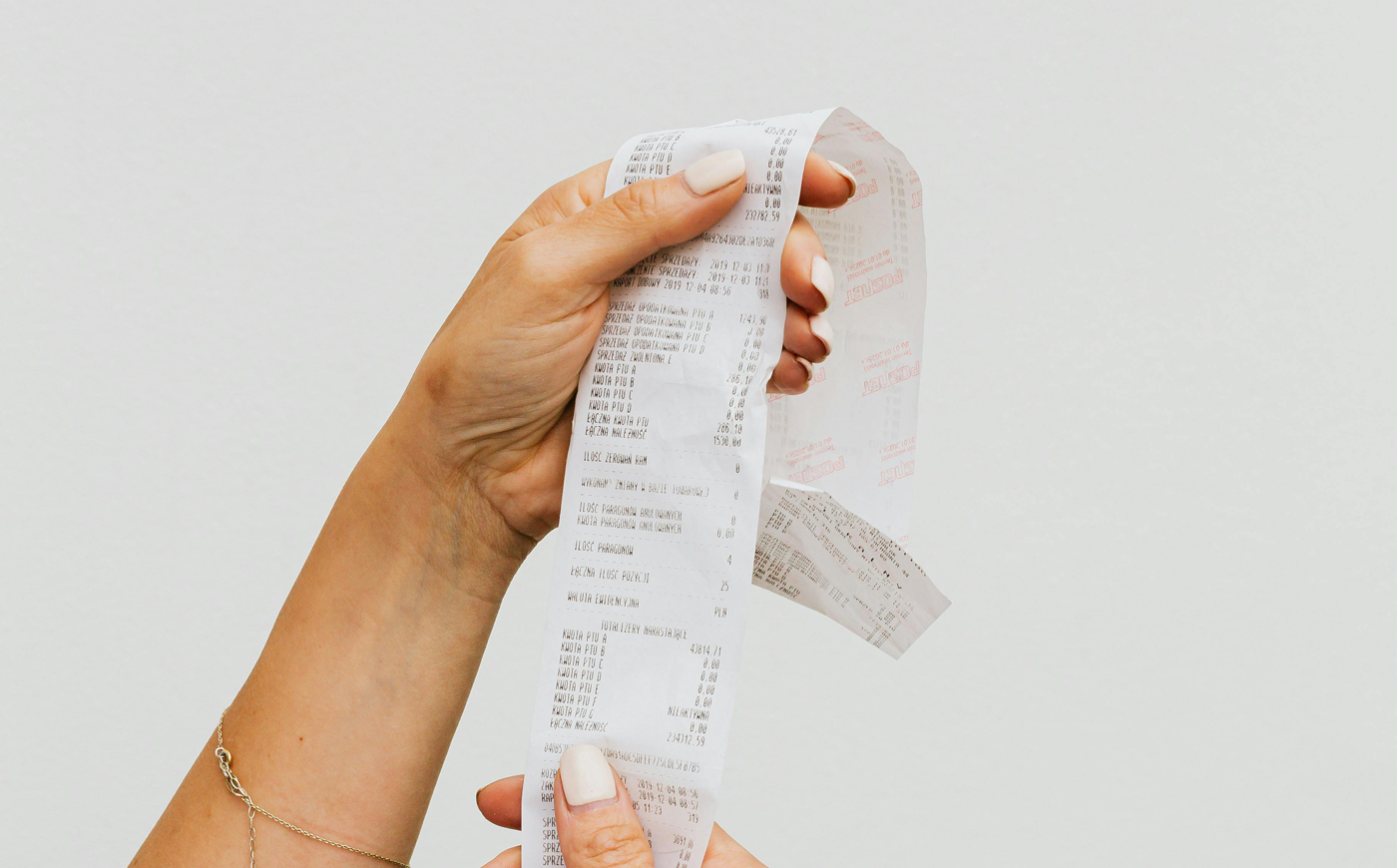
Why Most People Need One Sooner Than They Think
Receipts don’t feel important in the moment.
You grab one after a coffee. It sits in your wallet. Or it lands in your inbox. You think, I’ll deal with it later.
But later doesn’t really come.
They stack up. They disappear. They get forgotten.
And somewhere in all of that… your money story gets blurry.
That’s where a receipt management system comes in.
Not as some over-the-top finance tool. Not as something built for accountants. Just a simple way to keep track of what’s actually happening with your spending — without the mess.
So, What Is a Receipt Management System?
At its core, a receipt management system is exactly what it sounds like.
It’s a tool that helps you:
- Capture receipts (paper or digital)
- Store them in one place
- Organise them automatically
- Turn them into something useful
That last part matters more than most people realise.
Because storing receipts is easy.
Understanding them? That’s where things usually fall apart.
Why Receipts Still Matter (Even in a Digital World)
It’s easy to assume receipts don’t matter as much anymore.
After all, everything shows up in your bank account, right?
Sort of.
But bank transactions don’t tell the full story.
They show where money went. Not always why.
Receipts fill in the gaps.
They show:
- What you actually bought
- Whether it was necessary or impulsive
- Patterns across days, weeks, months
- Details you won’t remember later
Without that layer, you’re only seeing half the picture.
The Real Problem: It’s Not Tracking — It’s Follow-Through
Most people don’t avoid receipt tracking because they don’t care.
They avoid it because it feels like effort.
Too many steps. Too much thinking. Too easy to forget.
Even when people try, it usually goes like this:
- They download an app
- Use it for a few days
- Fall off
- Never go back
Not because the idea is bad.
Because the system doesn’t fit real life.
What a Good Receipt Management System Actually Does
There’s a difference between a tool that stores receipts… and one that actually helps.
A strong receipt management system should quietly handle the hard parts.
- Capture Without Friction
If it takes too long, it won’t happen.
The best systems let you:
- Snap a photo in seconds
- Upload from email automatically
- Save receipts as you go
No complicated process. No extra steps.
- Organise Without Thinking
Manual sorting sounds fine… until you’re doing it.
A good system:
- Categorises expenses automatically
- Recognises common purchases
- Keeps things structured without effort
You shouldn’t need to “manage” it constantly.
- Turn Data Into Something Useful
This is where most tools fall short.
They store receipts — but don’t tell you anything meaningful.
A better system shows:
- Where your money is really going
- What patterns are forming
- What might need attention
Without this, it’s just storage.
- Stay Out of Your Way
This one’s underrated.
The best systems don’t demand constant input.
They work quietly in the background, so you don’t feel like you’re managing another task.
Different Types of Receipt Management Systems
Not all systems are built the same.
And choosing the right one depends on what you actually need — not what looks impressive.
Basic Storage Tools
These are the simplest.
They let you upload and store receipts.
That’s it.
Good for:
- Keeping records
- Light personal use
Not great for:
- Insights
- Behaviour tracking
- Financial awareness
Expense Tracking Platforms
A step up.
They combine receipts with expense categories and reports.
You get:
- Some structure
- Basic summaries
- A clearer view of spending
But often, they still require a lot of manual input.
Business-Focused Systems
Built for teams and accounting.
They include:
- Approval workflows
- Expense claims
- Integration with accounting software
Powerful — but usually too complex for everyday users.
Behaviour-Focused Systems
This is where things are shifting.
These systems don’t just track receipts.
They help you understand your habits.
You start to see:
- Why you spend the way you do
- Where patterns repeat
- What’s changing over time
It’s less about control… more about awareness.
Where Most Systems Go Wrong
There’s a common mistake across a lot of receipt tools.
They assume users will stay disciplined.
But real life isn’t like that.
People forget. They get busy. They lose motivation.
So systems that rely on:
- Manual entry
- Daily upkeep
- Perfect consistency
…tend to fail over time.
Not because they’re bad tools.
Because they don’t match human behaviour.
Why Simplicity Wins (Almost Every Time)
You don’t need a powerful system.
You need a usable one.
That means:
- Fewer steps
- Less thinking
- Faster interaction
The easier it is, the more likely you’ll stick with it.
And consistency matters more than capability.
How Crunchr Approaches Receipt Management Differently
Most systems focus on managing receipts.
Crunchr focuses on what those receipts reveal.
Because tracking alone doesn’t change anything.
Understanding does.
It Connects Receipts to Real Behaviour
Instead of just storing receipts, Crunchr helps you see:
- Spending patterns over time
- Repeating habits
- Areas that quietly drain money
It’s not about judgement.
It’s about clarity.
It Removes the Need for Overthinking
You don’t need to:
- Categorise everything perfectly
- Analyse reports manually
- Set up complex rules
You just use it — and the insights build naturally.
It’s Built for Everyday Use
Not accountants. Not finance experts.
Just people trying to stay on top of things without turning it into a second job.
That changes how it feels to use.
The Subtle Shift That Happens When You Use One
This is the part people don’t expect.
When you start using a receipt management system consistently, something changes.
Not overnight.
But gradually.
You Start Seeing Patterns
At first, it’s small things.
- A daily habit you didn’t notice
- A category that’s higher than expected
- Purchases that repeat more often than you thought
Then it becomes clearer.
You Become More Aware
You don’t necessarily stop spending.
But you start noticing it.
And that awareness alone changes behaviour.
You Make Better Decisions Without Forcing It
This isn’t about strict budgeting.
It’s more natural than that.
You adjust.
You shift.
You choose differently — without needing rules.
Common Mistakes to Avoid
Even with a good system, a few habits can get in the way.
Trying to Track Everything Perfectly
Perfection isn’t the goal.
Consistency is.
Missing a few receipts won’t break anything.
Ignoring What You Collect
Tracking without reflection doesn’t help.
Take a moment, now and then, to look at patterns.
That’s where the value is.
Overcomplicating the Process
If it feels like work, simplify it.
The system should support you — not slow you down.
Who Actually Needs a Receipt Management System?
It’s easy to assume this is just for businesses.
It’s not.
Everyday Users
If you:
- Wonder where your money goes
- Want more control
- Feel slightly disconnected from your spending
It helps.
Freelancers and Small Business Owners
If you:
- Track expenses
- Claim deductions
- Manage irregular income
It becomes essential.
Anyone Trying to Build Better Habits
Even without a financial goal, awareness matters.
And receipts are a simple way to build that.
The Future of Receipt Management
Things are changing.
Slowly, but noticeably.
Receipt management systems are moving toward:
- Automation (less manual input)
- Real-time insights (not just reports)
- Behaviour awareness (not just data)
The goal isn’t just to track spending.
It’s to help people understand it.
Choosing the Right System for You
There’s no one-size-fits-all answer.
But a few questions help narrow it down:
- Do you want storage or insight?
- Do you prefer automation or control?
- Do you want something simple or feature-heavy?
If you’re honest about how you’ll actually use it, the choice becomes clearer.
A Simple Way to Get Started
You don’t need a perfect setup.
Just begin.
- Capture a few receipts each day
- Let the system organise things
- Check in once a week
That’s enough.
From there, patterns start to show.
Summary
A receipt management system isn’t really about receipts.
It’s about awareness.
It’s about seeing what’s actually happening — not what you think is happening.
Because once you see clearly, things tend to shift on their own.
Spending becomes more intentional.
Decisions feel easier.
And money stops feeling… random.